
Mentorship as a Two-Way Investment
Mentorship has long been recognised as one of the most effective approaches to developing leadership, strengthening careers, and accelerating professional growth. A multidisciplinary meta-analysis of 112 studies found that mentoring is associated with significant career, behavioural, relational, motivational, and psychosocial benefits for mentees across multiple sectors and contexts. Yet the same body of research also indicates that mentoring relationships create value beyond those receiving guidance.
Increasingly, organisations are recognising mentorship not simply as a mechanism for transferring knowledge from one generation to another, but as a reciprocal process of learning. Research has found that mentors often report increased confidence, stronger leadership capability, renewed purpose, and greater job satisfaction. According to a 2026 synthesis of workplace mentoring research, 87% of mentors and mentees reported feeling more empowered and confident through mentoring relationships, while 84% described mentoring as a source of two-way inspiration. The same review found that 89% of people who have been mentored later become mentors themselves, illustrating how mentoring can create a multiplier effect across organisations and communities.
The emergence of reverse mentoring has further strengthened this perspective. Originally developed to help senior leaders better understand rapidly changing technologies and workplace dynamics, reverse mentoring recognises that learning does not move in only one direction. A 2024 study found that younger mentors not only helped senior colleagues navigate technological and organisational change, but also gained leadership experience, expanded professional networks, increased confidence, and strengthened their own innovative capacity through the mentoring process.
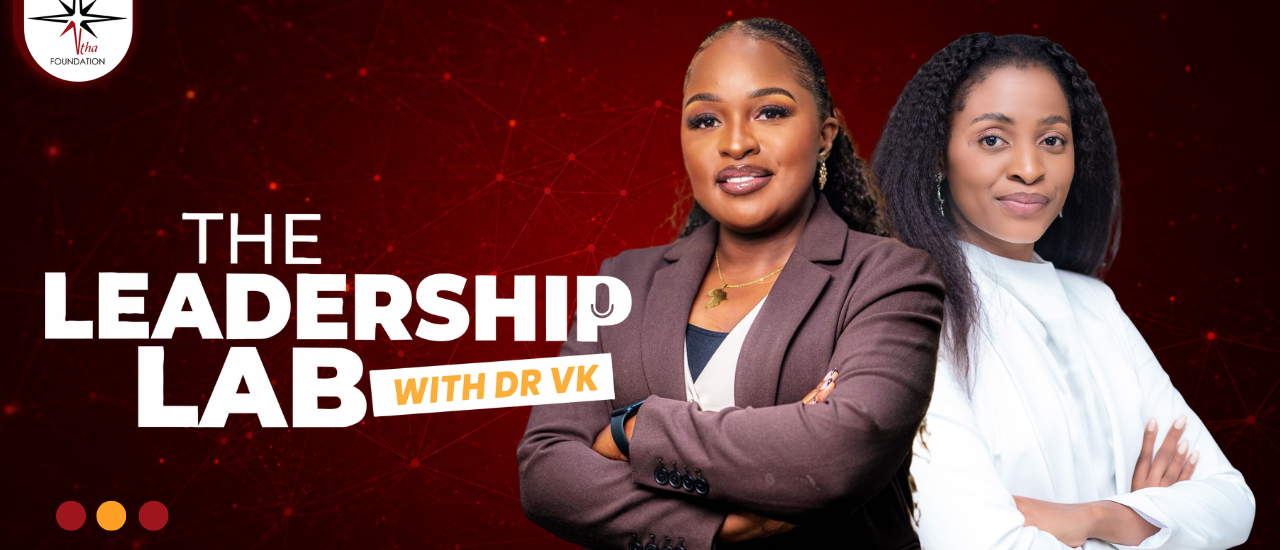
These findings formed an important point of reflection during a recent episode of The Leadership Lab, hosted by Dr. Vera Kamtukule—Executive Coach, author, and former Cabinet Minister—which featured Nthanda Manduwi, Founder of the Ntha Foundation.
Among the themes explored was a question that receives comparatively little attention within discussions on leadership development:
What does a mentor gain from mentoring?
The question challenges one of the most common assumptions surrounding mentorship—that it is primarily an act of giving.
Traditionally, mentors contribute experience, institutional knowledge, professional networks, and lessons accumulated over many years. Mentees, however, contribute something different. They bring emerging technical knowledge, fresh perspectives, curiosity, new ways of thinking, and an understanding of social and technological shifts that may not yet have reached senior leadership.
The value exchanged is rarely identical, but it does not need to be. What matters is that both participants leave the relationship having learned something they did not know before.
This perspective has important implications for young professionals.
Much attention is devoted to identifying potential mentors, requesting meetings, and expanding professional networks. Far less attention is given to becoming someone worth investing in.
The question therefore shifts from Who can mentor me? to What value do I bring to a mentoring relationship?
Preparation, intellectual curiosity, integrity, accountability, and a demonstrated willingness to act on feedback become just as important as ambition. Senior leaders rarely lack the desire to support emerging talent; they often lack time. Mentorship therefore becomes an investment decision, with mentors choosing to invest their most limited resource in individuals who demonstrate both potential and commitment.
For institutions designing leadership and youth development programmes, the implications are equally significant. Effective mentorship initiatives should not simply connect experienced professionals with aspiring leaders. They should cultivate reciprocal relationships built on trust, preparation, mutual learning, and shared growth.
As workplaces become increasingly multigenerational and technological change continues to accelerate, the future of mentorship is likely to become less hierarchical and more collaborative. Experience will remain invaluable, but so too will adaptability, openness, and the recognition that insight can move in more than one direction.
The full conversation between Dr. Vera Kamtukule and Nthanda Manduwi is available on The Leadership Lab, where the discussion extends beyond mentorship to explore leadership, purpose, and professional development in a rapidly changing world.
Work With Us
Want to partner on or fund one of our programs / initiatives? We are always open to collaborations and partnerships. Contact our Founder; Ms. Nthanda Manduwi via contact@nthafoundation.org.
To keep up with the work of the Ntha Foundation, our hubs under the Kwathu Kollective, our initiatives, and our projects, follow us on social media:
NTHA FOUNDATION SOCIAL MEDIA
KWATHU KOLLECTIVE SOCIAL MEDIA