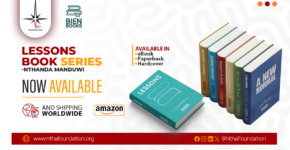

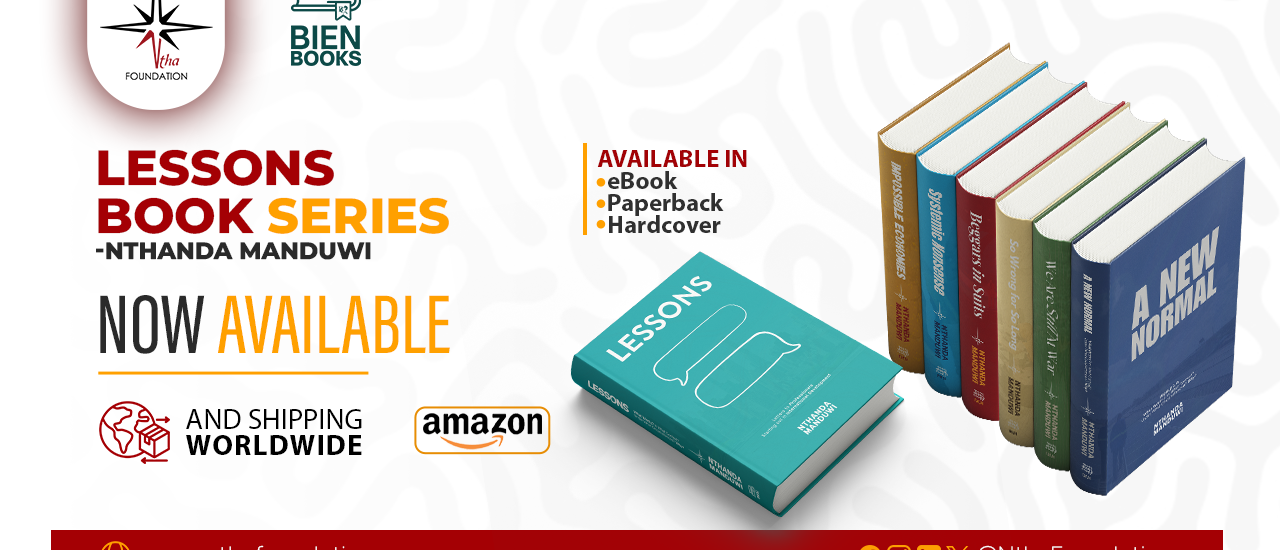
The Lessons Book Series brings together Nthanda Manduwi’s decade of work across public service, international development, entrepreneurship, technology, and systems thinking.
Across seven volumes, the series examines why good intentions often fail, why institutions struggle to learn, and what it may take to build better systems.
The books do not close the conversation. They open it.
The Books
1. Lessons
Letters to Professionals Starting Out in International Development
Lessons is a practical and reflective entry point for professionals beginning their journey in international development.
Written as a set of letters to those entering the field, the book explores the distance between what young professionals are taught to believe about impact and what they often encounter inside institutions. It examines evidence, bureaucracy, digital transformation, local knowledge, global narratives, and the quiet compromises that shape development work.
Rather than offering a simple career guide, Lessons asks readers to think carefully about what it means to serve, to learn, and to remain honest inside systems that often reward performance more than reflection. It is the most personal book in the series: a beginning, a warning, and an invitation to approach development with humility.
2. Beggars in Suits
A Study in Elite Capture and the Corruption of “Good Intentions”
Beggars in Suits studies elite capture, respectability, and the corruption of good intentions. It asks how development spaces can become stages where the language of service hides gatekeeping, dependency, and power.
The book examines how people and institutions can appear progressive while preserving the systems they claim to change. It looks at the performance of credibility, the politics of proximity to power, and the ways crisis can become professionally useful to those who claim to solve it.
At its core, Beggars in Suits is about the uncomfortable gap between intention and incentive. It challenges readers to look beyond polished language and ask who benefits when suffering becomes a career, a brand, or a funding model.
3. Systemic Nonsense
Untangling the Logic Behind a World That Runs on Illogic
Systemic Nonsense untangles the logic behind institutions that appear irrational but continue to function exactly as designed. It studies bureaucracy, circular incentives, consultation theatre, meaningless metrics, and the strange comfort systems find in their own confusion.
The book asks why so much professional work produces activity without accountability, reports without learning, and meetings without movement. Rather than treating dysfunction as accidental, it examines how nonsense becomes embedded, rewarded, and defended.
Systemic Nonsense is about learning to recognise institutional illogic when it has been made to look normal. It gives language to the absurdities many professionals experience but are often trained not to name.
4. Impossible Economies
A Front-Row Seat to How Big Governments Have Failed Small Nations Throughout History
Impossible Economies examines how small nations are asked to succeed inside economic arrangements they did not design. It studies the historical burden of colonial trade, aid dependency, policy prescriptions, and the myth that every country is competing on equal terms.
The book looks at how large governments, powerful institutions, and global economic rules have shaped the choices available to smaller nations throughout history. It asks what development means when countries are expected to perform resilience under conditions produced by extraction, constraint, and unequal bargaining power.
Impossible Economies is not a rejection of reform; it is a challenge to shallow explanations of failure. It argues that some economies are called impossible because the world keeps refusing to admit what made them so.
5. So Wrong for So Long
So Wrong for So Long studies why bad ideas survive after evidence has arrived. It asks how institutions learn to manage failure instead of correcting it, and why systems can continue defending approaches that no longer hold up under scrutiny.
The book examines the comfort of familiar frameworks, the politics of admitting error, and the role good people play in sustaining systems they know are not working. It is about policy memory, institutional ego, professional incentives, and the quiet ways failure is explained away.
So Wrong for So Long does not simply ask why systems fail. It asks why failure becomes acceptable, why correction becomes threatening, and why being wrong can become easier than changing course.
6. We Are Still at War
Inside the Quiet Wars Big Powers Still Wage—Without Armies
We Are Still at War examines the quiet wars powerful countries continue to wage without armies. It looks at power through rules, money, infrastructure, data, borders, narratives, and institutional control.
The book argues that domination has not disappeared; it has often become more technical, more polite, and harder to name. Instead of focusing only on open conflict, it studies the ways countries are pressured, constrained, disciplined, and shaped through systems that appear neutral.
We Are Still at War asks readers to reconsider what conflict looks like in a world governed by finance, technology, supply chains, policy regimes, and information flows. It is a study of modern power after empire has changed its clothes.
7. A New Normal
A Future-Minded Reflection on Systems Rebirth
A New Normal brings the series into World 2.0: a world of smarter machines, faster evidence, and the same human egos. It asks what works, in what context, under what circumstances, and why.
The book gathers the questions raised across the series and turns toward the future: not with easy optimism, but with disciplined imagination. It examines what kind of systems might be possible if institutions learned with humility, designed around context, and stopped confusing technological progress with moral progress.
A New Normal is the closing argument of the series. It invites readers to move beyond critique and ask what it would take to build institutions capable of learning, adapting, and telling the truth.
Each book is a chapter in a much larger story.
Together, they form a complete arc—from awakening, to confrontation, to rebuilding.
Subscribe to The Lessons Conversation to follow the discussions shaping the next edition and receive one complimentary book each week during the Founder’s Edition release.
Happy reading. 🩵🤍
Delve into Business and International Development with Nthanda Manduwi
Systems Don’t Have to Be Broken to Produce Bad Outcomes
I contemplated not publishing an episode this week [I explain why in the podcast], and then ended up recording my longest episode yet.
And to make up for publishing a little late the past two weeks, I am publishing this a day early. You’re welcome, or I am sorry?
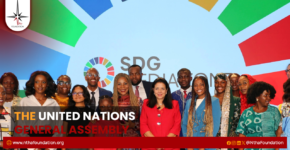
I woke up to a message from a friend sharing a video of President William Ruto demanding Veto power for African nations at the 80th United Nations General Assembly [I happened to be in attendance], and I jumped out of bed and got to writing about my favorite beverage: tea! I also got to pen about slave trade, and colonization, and war [I know, what does any of this have to do with Hibiscus tea??!]
This week’s episode explores one of the central ideas behind the third book in the Lessons Book series – Systemic Nonsense: what if many of the frustrations we experience in institutions are not accidents or failures, but predictable outcomes of how those systems were designed?
It often feels like bureaucracy feels so resistant to change, and that reforms often produce more process than progress. It also seems that good intentions so rarely translate into meaningful outcomes. If you’ve pondered on these thoughts before, then these conversations are for you.
This Week’s Book
📖 Systemic Nonsense [Book 3]
This week only, from 27–31 July, the Kindle edition of Systemic Nonsense is available free as part of its Founders Edition launch.
Systemic Nonsense explores several ideas on international development in much greater depth. It asks a simple question:
What if the system isn’t failing? What if it’s doing exactly what it was designed to do?
Whether you listen, read, or dive into the book, I hope it leaves you asking better questions about the systems we inherit—and the ones we choose to build next.
How to Read
To receive your free Kindle copy:
* Click the Amazon link below.
* Select the Kindle edition while the promotion is active.
* Add it to your Kindle library.
You do not need a Kindle device. The free Kindle app works on iPhone, Android, tablets, Macs, and PCs, allowing you to build your digital library wherever you read.
Helpful Links
📚 Read this week’s book for free [search on Amazon or in Kindle for the book that is free for the week, and feel free to purchase the others]:http://amazon.com/dp/B0FQNJ61SB
📰 Subscribe to The Lessons Conversation:
Africa paperback pre-orders:https://forms.office.com/r/RMRMKTNd1M
Enjoyed listening to the Lessons Conversation? This post is public so feel free to share it.
This is a public episode. If you would like to discuss this with other subscribers or get access to bonus episodes, visit podcast.lessonsconversation.com
![Book 3: Systemic Nonsense [lessonsbooks.com]](https://nthafoundation.org/wp-content/uploads/2026/07/podcast-episode-image-5a3bbb435029c89d668c5fa2682893ef-768x768.jpg)
Work With Us
Want to partner on or fund one of our programs / initiatives? We are always open to collaborations and partnerships. Contact our Founder; Ms. Nthanda Manduwi via contact@nthafoundation.org.
To keep up with the work of the Ntha Foundation, our hubs under the Kwathu Kollective, our initiatives, and our projects, follow us on social media:
NTHA FOUNDATION SOCIAL MEDIA
KWATHU KOLLECTIVE SOCIAL MEDIA