
Across Africa, and really most of the global south, food systems are under pressure from climate volatility, population growth, and fragmented infrastructure. These pressures are not new — they are structural realities that require structural solutions. What is new is Africa’s emerging capacity to design systems that not only withstand these pressures but transform them into engines of innovation.
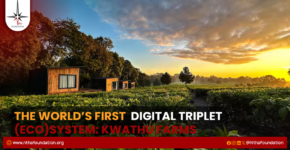
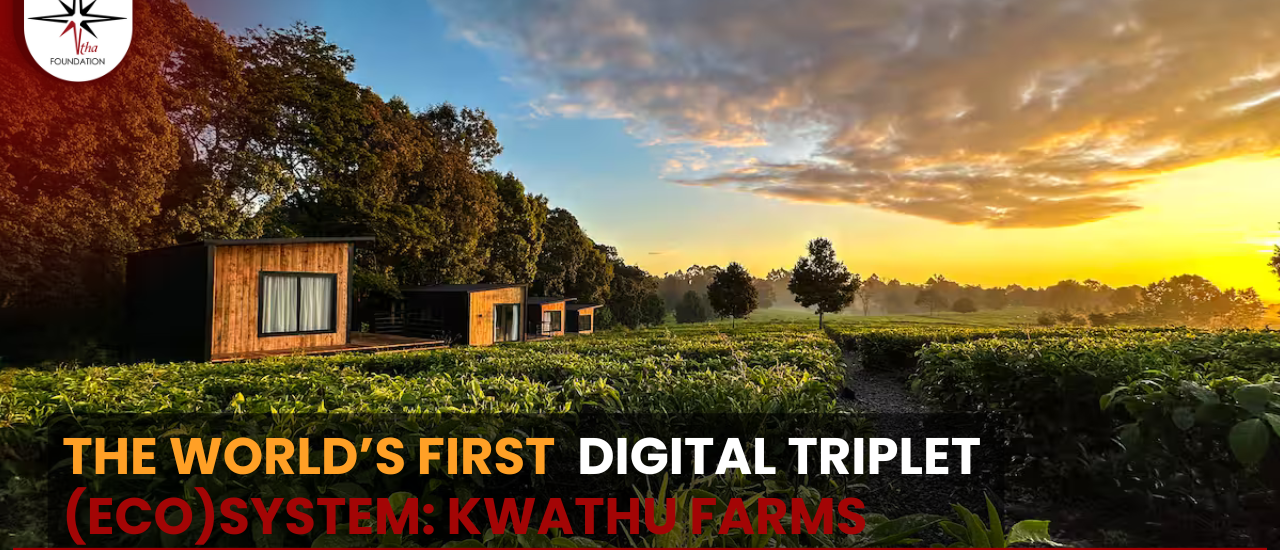
KSIF, the Kwathu Smart Innovation Farms, is part of that shift.
Developed by an African founder, headquartered within Q2 Corporation in South Africa, and powered by Q2 Systems in the United States, KSIF is a systems innovation model designed for the continent and ready for the world.
KSIF is the agricultural node in a broader architecture: a network of real-world systems linked to digital twins and advanced simulation environments. It represents the next frontier of Africa’s contribution to global systems design — a future where African problems produce African solutions with global relevance.
Why KSIF? Why Now?
As we trained young people in digital skills and entrepreneurship, we saw an opportunity — and a responsibility — to channel that same innovation toward Malawi’s most fundamental challenge: food stability.
KSIF is the result of that shift.
A new kind of agricultural innovation system that blends real-world farming, scientific modeling, and gaming technology into a unified learning and development platform.
It is built on the belief that:
We learn systems best by interacting with them.
We improve systems best by simulating them.
We transform systems best by looping insights back into real life.
Our purpose is simple:
To transform African agricultural resilience using a Digital Triplet Model — a loop connecting real-world farms, digital twins, and playable predictive simulations.
Africa has the youngest population on earth, the fastest-growing talent base, and some of the most dynamic food economies. KSIF leverages this demographic power by offering a new way to learn, test, and scale climate-smart agriculture.
The Digital Triplet Model: Africa’s New Systems Blueprint
The Digital Triplet is a three-layer loop:
1. Real-Life System
A physical climate-smart agricultural environment where real experiments, data collection, and operational decisions happen.
2. Digital Twin
A scientific model of the farm that captures environmental, economic, and operational dynamics, enabling precise analysis and forecasting.
3. Playable Predictive Simulation
A game — built to triple-A standards — where users interact with the digital twin, test scenarios, learn systems behaviour, and generate insights that feed back into real-world practice.
Together, these three layers create a loop:
Real Data → Digital Modeling → Playable Simulation → Real-World Action.
This loop grows smarter with each cycle, making KSIF a living laboratory for Africa’s future food systems.
A Continental Innovation Model
Although KSIF’s conceptual roots draw from lessons observed in Malawi, its design is intentionally continental.
The challenges it addresses exist in:
- Zambia
- Zimbabwe
- South Africa
- Kenya
- Ethiopia
- Nigeria
- Senegal
- and beyond
And the model is adaptable — from smallholder contexts to commercial farms, from rural agriculture to peri-urban food systems.
Africa does not lack solutions.
Africa lacks systems that integrate solutions.
KSIF is one of the first attempts to unify:
- agriculture
- data
- youth capability
- simulation
- robotics
- digital learning
- climate intelligence
…into one coherent operating system.
Education, Agriculture, and Governance — Reimagined
KSIF is not simply an agricultural project.
It is an entry point into rethinking:
- how African youth learn
- how African governments plan
- how African farmers adapt
- how African markets stabilise
- how African innovation scales
A student playing the KSIF simulation is not “learning a game.”
They are learning systems literacy — the skill that underpins 21st-century governance, entrepreneurship, and technology.
A policymaker using KSIF is not guessing outcomes.
They are testing decisions inside a living model before implementing them.
A community using KSIF is not dependent on external expertise.
They are part of a continuous feedback loop that strengthens their own resilience.
Built in Africa. Built for the World.
Q2 Corporation is headquartered in South Africa because Africa’s talent, infrastructure, and strategic location make it a natural systems hub.
Q2 Systems is incorporated in the United States because global technology partnerships, financing structures, and engineering pipelines are strengthened by U.S. integration.
KSIF stands at the intersection — an African innovation with global scalability.
We are building a model that can work in:
- drought-prone regions
- flood-prone regions
- high-yield commercial zones
- smallholder communities
- urban vertical farms
- national policy labs
Join the Early Movement
In 2026, KSIF will launch its first pilot nodes.
We welcome collaboration from:
- research institutions
- development agencies
- AI and simulation engineers
- agricultural universities
- government ministries
- private-sector agtech firms
- youth innovators
- investors in climate and food systems
This is a long-term project — a commitment to designing the African future rather than reacting to its challenges.
If you want to be part of that future, join the KSIF waitlist.
A new era of African systems innovation is underway.
KSIF is one of its first blueprints.
KSIF: Designed in Africa.
Built for a world that needs resilient systems.
Join the KSIF waitlist
Learn more about Q2 Systems
Work With Us
Want to partner on or fund one of our programs / initiatives? We are always open to collaborations and partnerships. Contact our Founder; Ms. Nthanda Manduwi via contact@nthafoundation.org.
To keep up with the work of the Ntha Foundation, our hubs under the Kwathu Kollective, our initiatives, and our projects, follow us on social media:
NTHA FOUNDATION SOCIAL MEDIA
KWATHU KOLLECTIVE SOCIAL MEDIA