
The Malawi Queens have secured their place at the 2027 Netball World Cup in Sydney. Their qualification in Nairobi is the latest chapter in one of Malawi’s longest, most consistent and most successful sporting traditions.
For many Malawians, the extraordinary rise of the national women’s football team has made international women’s sport newly visible. The Scorchers’ historic qualification for the 2027 FIFA Women’s World Cup has deservedly captured national attention.
But in netball, Malawi has been operating at this level for decades.
The Malawi Queens are not an emerging team discovering the international stage for the first time. They are one of the country’s most established national sporting institutions: World Cup regulars, long-time members of the global top ten, producers of internationally recognised players, and a team that has repeatedly competed against—and beaten—some of the strongest netball nations in the world.
This week in Nairobi, that history has been on full display again.
The road through Nairobi
The Netball World Cup Sydney 2027 Africa Qualifier is taking place at the Moi International Sports Centre in Kasarani, Nairobi, from 19–26 September 2026. Ten countries entered the competition: Botswana, Kenya, Malawi, Namibia, Nigeria, South Africa, Tanzania, Uganda, Zambia and Zimbabwe. South Africa and Uganda had already qualified for Sydney through their World Netball rankings and therefore were not competing for the two remaining African qualification places.
Malawi were drawn in Pool 2 alongside Uganda, Kenya, Zambia and Nigeria.
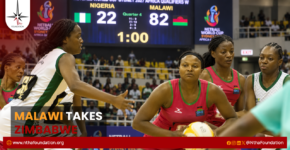
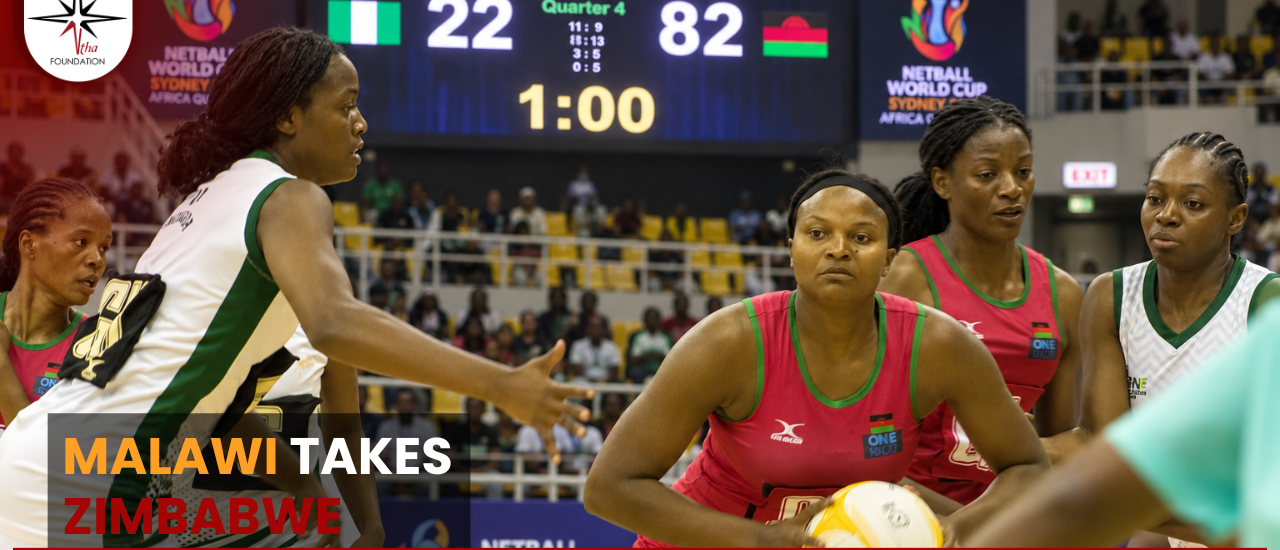
The Queens began with a 72–38 victory over Zambia, followed by a 55–47 win over hosts Kenya. Their third match produced one of the most emphatic results of the tournament: an 82–22 demolition of Nigeria.
The Queens’ only defeat in the pool stage came against Uganda, who edged Malawi 54–49 in the final pool match.
Their complete run was:
Malawi 72–38 Zambia
Malawi 55–47 Kenya
Malawi 82–22 Nigeria
Uganda 54–49 Malawi
Three wins from four matches were enough for Malawi to finish second in Pool 2, behind Uganda, and advance to the semifinals.
The Queens scored 258 goals across those four matches, one of the strongest attacking returns in the competition.
There is one statistical discrepancy worth recording accurately. The individual match scores published by World Netball total 161 goals conceded, which mathematically produces a +97 goal difference. An Africa Netball standings graphic circulated during the competition listed Malawi at 160 conceded and +98. For the purposes of this article, the individual published match results provide the internally consistent calculation.
Either way, the larger point remains: Malawi emerged from the pool stage as one of the competition’s highest-scoring teams.
And, crucially, that performance has now taken them to Sydney.
Malawi have qualified
On 24 September, World Netball formally confirmed that Malawi and Namibia have qualified to be invited to compete at the 2027 Netball World Cup in Sydney.
The governing body clarified that, under the competition regulations, the top two teams from each pool advance to the semifinals.
The semifinalists are:
South Africa vs Malawi
Uganda vs Namibia
Because South Africa and Uganda had already qualified for Sydney through the World Netball rankings, Malawi and Namibia’s progression into the semifinals means the two countries have secured the remaining African invitations.
In practical terms:
The Malawi Queens are going to the World Cup.
The uncertainty that surrounded the competition format over the preceding days is therefore resolved. Malawi do not need to defeat Zimbabwe in a separate qualification semifinal. Their place in Sydney is already secured.
Friday’s match is instead the next stage of the tournament itself.
Next: South Africa
Malawi now face one of African netball’s traditional powers: the South Africa SPAR Proteas.
Friday, 25 September 2026
South Africa vs Malawi
14:00 EAT in Nairobi / 13:00 CAT in Malawi
NWC2027 Qualifier Africa Semifinal 1
The second semifinal pits Uganda against Namibia. World Netball has confirmed that all four semifinalists will continue through the competition, with Malawi and Namibia already assured of their Sydney places.
Qualification is settled.
The question now is how far the Queens can go in Nairobi.
Why Malawi is already a netball nation
To understand why this achievement matters, it helps to understand just how deep netball runs in Malawi.
Historical research into sport and education in colonial-era Nyasaland indicates that netball was introduced into government girls’ schools in the late 1930s or early 1940s. Over time, it became a major component of girls’ physical education and extracurricular sport.
That history matters because elite sport is rarely created at the moment a national team becomes visible internationally.
It is built much earlier.
It is built on school courts and community grounds. It is built by teachers and coaches introducing girls to the game. It is built through local competitions and generations of young women growing up with a sport that already belongs to them.
For Malawi, netball became that sport.
Long before professional contracts, global broadcasts or social media highlights, generations of Malawian girls were already playing the game.
That culture eventually produced one of the most important athletes in the country’s sporting history.
Mary Waya and Malawi’s first global era
Mary Waya began playing international-level netball for Malawi at just 14 years old and went on to represent the country in more than 200 matches. Her international career included Netball World Cups, Commonwealth Games and World Netball Series appearances.
Malawi made its Netball World Cup debut in Birmingham in 1995.
Twelve years later came the breakthrough that established the Queens as a genuine global force.
At the 2007 World Netball Championships in Auckland, Malawi finished fifth in the world—still the country’s highest-ever World Cup placing. Waya was central to that generation and made her final Netball World Cup appearance at the tournament.
Fifth in the world was not merely a symbolic achievement.
Malawi had finished ahead of countries with substantially larger economies, deeper professional sporting structures and considerably greater resources.
It established that the Queens belonged among the leading teams in international netball.
And it became the foundation for what followed.
From Mary Waya to Mwawi Kumwenda
The next era produced Mwawi Kumwenda, one of the most internationally recognised athletes Malawi has ever produced.
At the 2015 Netball World Cup in Sydney, Malawi finished sixth. They were also the highest-scoring team at the tournament. Kumwenda was named Player of the Tournament after scoring an extraordinary 321 goals in eight matches at a 91 percent shooting rate. She was the only player at the competition to score more than 300 goals.
Her performances turned her into a global star.
In 2016, Kumwenda was voted International World Games Association Athlete of the Year, recognition that extended well beyond netball itself.
She also built a major professional career overseas, helping demonstrate that Malawian netball talent could compete successfully in elite international leagues.
Then came one of the defining results in Malawi’s sporting history.
At the 2018 Commonwealth Games, the Queens defeated New Zealand 57–53. New Zealand were one of the traditional giants of global netball. Malawi beating them was not simply another pool-stage victory; it demonstrated what the Queens were capable of against the established powers of the sport.
It remains one of those results that captures Malawi at its best: fearless, technically gifted and capable of disrupting the sport’s traditional hierarchy.
A remarkably consistent global record
What makes Malawi’s netball story particularly significant is that it cannot be reduced to one great athlete or one golden generation.
The defining characteristic has been consistency.
After finishing fifth in 2007, Malawi finished sixth at the 2011 World Cup and sixth again in Sydney in 2015. At Cape Town 2023, the Queens finished seventh in the world.
As of 1 September 2026, World Netball ranked Malawi eighth in the world, behind Australia, New Zealand, England, Jamaica, South Africa, Uganda and Tonga.
That means Malawi has spent much of the past two decades operating around the world’s top six to eight teams.
At one stage, the Queens’ ranking was high enough to remove the need for regional World Cup qualification altogether.
Ahead of the 2019 Netball World Cup, Malawi were ranked sixth and had already qualified automatically through the world rankings. They participated in the African Championships that year, but their World Cup place was already secure.
For years, Malawi were simply already in.
When the qualification route changed
By the next World Cup cycle, Malawi no longer held one of the automatic qualification positions.
The Queens therefore had to return to the African qualification route in 2022.
They succeeded.
World Netball subsequently confirmed that Malawi and Zimbabwe qualified through the African tournament for Cape Town 2023. South Africa had already qualified as hosts, while Uganda had qualified through the world rankings.
Malawi then went to Cape Town and finished seventh.
Four years later, the Queens were asked to do it through Africa again.
They have now succeeded again.
The complication in Nairobi
The path to that confirmation, however, was unusually complicated.
The Nairobi competition brought together teams competing for the Africa Cup with teams pursuing World Cup qualification, even though South Africa and Uganda had already secured their Sydney places through the world rankings.
That overlap created public uncertainty over how the remaining World Cup places would ultimately be allocated.
Different interpretations of the postseason format circulated after the pool stage, including the possibility of additional qualification semifinals involving the second- and third-placed eligible teams.
World Netball’s 24 September clarification has now resolved the matter.
The governing body stated that the competition regulations advance the top two teams from each pool into the semifinals. With South Africa and Uganda already qualified, Malawi and Namibia are therefore the two remaining African qualifiers for Sydney.
The Queens’ pool-stage performance did, in fact, secure qualification.
There is no additional match Malawi must win to reach the World Cup.
Back to Sydney
There is something fitting about where this journey leads.
In 2015, Sydney was the stage on which Mwawi Kumwenda produced one of the greatest individual World Cup performances by a Malawian athlete and was named the tournament’s best player.
Twelve years later, the Malawi Queens will return.
The personnel will change. The circumstances will change. A new generation will carry the flag.
But the lineage is unmistakable.
From Mary Waya to Mwawi Kumwenda. From school courts in Malawi to fifth in the world. From the upset of New Zealand to the emergence of internationally recognised professionals. From automatic qualification among the global elite to fighting through African qualification tournaments.
And now, from Nairobi back to Sydney.
More than one tournament
There is a tendency in sport to treat qualification as though it begins with the first whistle of a tournament.
Malawi’s story tells us otherwise.
The road to Sydney did not begin in Nairobi.
It began on school courts decades ago.
It runs through the girls who played netball when it was one of the few organised sporting opportunities widely available to them. Through Mary Waya and the generation that took Malawi to fifth in the world. Through Mwawi Kumwenda becoming Player of the Tournament in Sydney. Through Joyce Mvula and the Malawian players who carried the game into professional leagues abroad. Through every Queens team that kept Malawi among the strongest netball nations on earth.
And now it runs through this generation.
A generation that scored 258 goals in four pool matches in Nairobi.
A generation that beat Nigeria 82–22.
A generation that finished second in its pool and earned its way into the semifinals.
A generation that is now officially going to Sydney.
The tournament in Nairobi is not yet over. South Africa await in the semifinal, and the Queens still have another opportunity to test themselves against one of the strongest teams on the continent.
But the biggest question has already been answered.
Malawi will be at the 2027 Netball World Cup.
Congratulations to the Malawi Queens. 🇲🇼👑
Sydney awaits.
Key facts
Malawi made its Netball World Cup debut in 1995 and achieved its best-ever finish of fifth in 2007. The Queens finished sixth in 2015 and seventh at Cape Town 2023, and are currently ranked eighth in the world.
Mary Waya represented Malawi more than 200 times and helped establish the country on the global stage. Mwawi Kumwenda was named Player of the Tournament at Sydney 2015 after scoring 321 goals in eight matches.
In Nairobi in 2026, Malawi defeated Zambia 72–38, Kenya 55–47 and Nigeria 82–22, before narrowly losing 54–49 to Uganda. World Netball confirmed on 24 September that Malawi and Namibia’s progression to the semifinals means both have qualified to be invited to the 2027 Netball World Cup in Sydney.
Malawi now face South Africa in the semifinal on Friday, 25 September.
Work With Us
Want to partner on or fund one of our programs / initiatives? We are always open to collaborations and partnerships. Contact our Founder; Ms. Nthanda Manduwi via contact@nthafoundation.org.
To keep up with the work of the Ntha Foundation, our hubs under the Kwathu Kollective, our initiatives, and our projects, follow us on social media:
NTHA FOUNDATION SOCIAL MEDIA
KWATHU KOLLECTIVE SOCIAL MEDIA